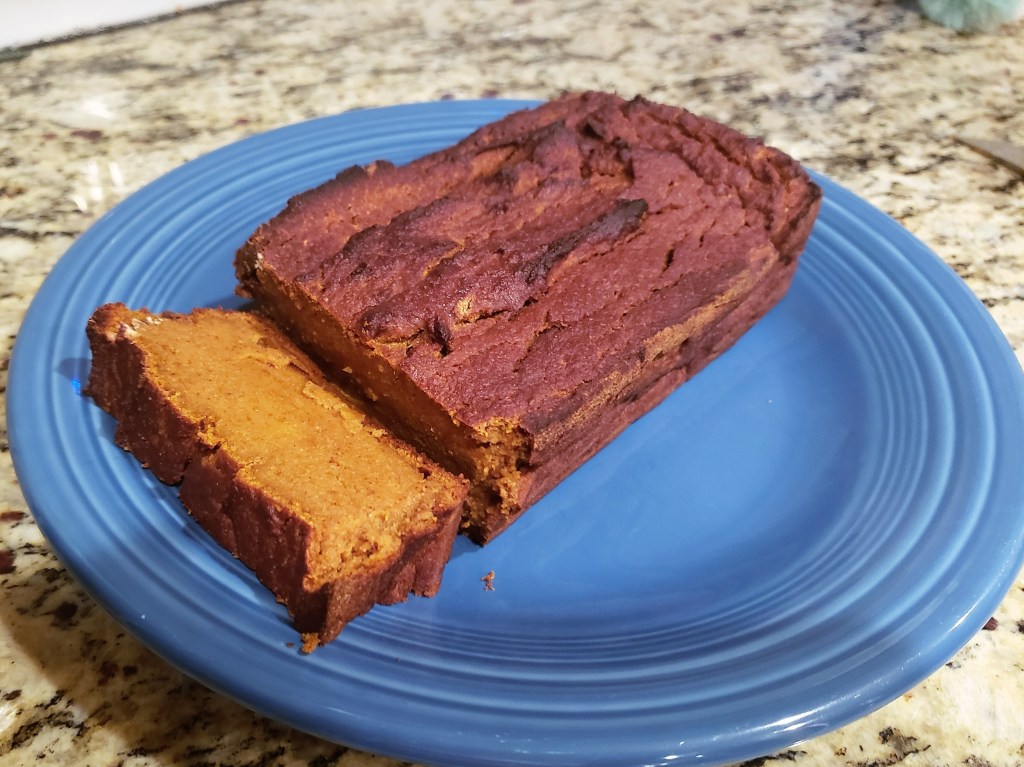
Ingredients
- 1 can pumpkin puree
- 1 cup tiger nut flour (packed)
- 1/2 cup cassava flour
- 1 tsp baking soda
- 2 eggs (not AIP friendly)
- 1 cup hot water
- 5 scoops of MCT oil powder
- Option: 1 cup of almond milk, coconut milk or oat milk in place of water and MCT oil powder
- 10-15 dates
- Pumpkin pie spice (not AIP friendly)
- Cinnamon
- Nutmeg (not AIP friendly)
- Ground clove
- Sea salt
- No-stick olive oil spray
Directions
- Preheat oven to 400 degrees.
- Combine hot water and MCT oil powder. Stir until MCT oil powder is fully dissolved and set aside.
- Note: I heat filtered water on the stove
- Option: Use 1 cup almond milk, coconut milk or oat milk instead of MCT oil powder/ water mixture
- In a large bowl, mix pumpkin puree, tiger nut flour, cassava flour, and baking soda.
- Note: I use an immersion blender, but you can mix with a whisk or spoon as well.
- In a blender, add the MCT oil powder mixture (or milk) and dates. Blend thoroughly until the mixture has a creamy consistency.
- Add blender contents to bowl and mix.
- Add Pumpkin Pie Spice, Cinnamon, Nutmeg, Clove and Sea Salt to the bowl and mix thoroughly. Taste now (before the eggs go in) and season to taste.
- Add 2 eggs to the bowl and mix until evenly mixed.
- Spray bread pan with no-stick olive oil spray. Add contents of the bowl to bread pan.
- Place bread pan in the oven for 1 hour.
- After 1 hour, remove the baking dish to cool for 45 minutes to 1 hour. Place in refrigerator until ready to serve.
Health Benefits
Pumpkin
- Pumpkin is packed with vitamins, minerals, and beta-carotene, a carotenoid that your body converts into vitamin A.
- 1 cup of cooked pumpkin contains:
- Protein: 2 grams
- Fiber: 3 grams
- Vitamin A: 245% of the Reference Daily Intake (RDI)
- Vitamin C: 19% of the RDI
- Potassium: 16% of the RDI
- Copper: 11% of the RDI
- Manganese: 11% of the RDI
- Vitamin B2: 11% of the RDI
- Vitamin E: 10% of the RDI
- Iron: 8% of the RDI
- Pumpkin has a high content of antioxidants, which stabilize free radicals and protect your cells’ health. Free radicals cause inflammation and have been linked to chronic diseases like cancer and heart disease.
- Pumpkin is high in Vitamins A, C, and E, which support the immune system.
- Pumpkin is great for maintaining eye health. It is one of the best sources of lutein and zeaxanthin, which lower the risks of age-related macular degeneration and cataracts.
- Pumpkin contains potassium, Vitamin C and fiber, which support heart health.
- Pumpkin is wonderful for your skin. It contains beta-carotene, which acts as a natural sunblock within the skin. It is also high in Vitamin C, which your body needs to make collagen. Pumpkins contain antioxidants like lutein, zeaxanthin, and Vitamin E that help the skin protect against UV rays.
Tiger Nut Flour
- Tiger nut flour is made from tiger nuts, which are not nuts, but edible tubers. Tiger nut flour is a great alternative flour for people on AIP, gluten-free, and paleo diets. It is similar in taste to almond flour. It can have a gritty texture, which can be adjusted in a sifter.
- Tiger nuts are rich in vitamins and nutrients, including Vitamin E, iron, phosphorous, Vitamin C, magnesium, zinc, potassium and calcium.
- Tiger nuts contain antioxidants, which help reduce inflammation and reduce the risk of chronic diseases like cancer and heart disease.
- Tiger nuts are rich in heart-healthy fats. Studies suggest that they improve vein and artery flexibility and blood circulation.
- Tiger nuts promote healthy digestion. They are high in insoluble fiber, which helps food pass through you gut easily and prevent against constipation. They contain resistant starch, which feeds the good bacteria in your gut. They contain enzymes that relieve gas, indigestion and diarrhea.
- Tiger nuts help control blood sugar. They are good sources of fiber and arginine, which can contribute to lower blood sugar levels. They also contain compounds that may reduce how much sugar is absorbed in your gut after a carb-rich meal.
Cassava Flour
- Cassava flour pairs nicely with tiger nut flour in baking and pancakes. I typically use a 1-to-1/2 ratio (ex. 1 cup of tiger nut flour to 1/2 cup of cassava flour). It also works well as a thickener in soups and gravies.
- Cassava flour is made from cassava, also known as yucca, which is a root vegetable in South America.
- Cassava contains many nutrients and vitamins, but once it’s peeled and chopped (as when turning it into flour), many of those nutrients are lost.
- Cassava flour is high in vitamin C, which supports your immune system and skin health and reduces stress.
Eggs
- Many people are allergic to eggs and people with leaky gut (many people with autoimmune conditions) should avoid eggs. This is because eggs contain lysozyme, which is thought to impair the gut lining, permitting food to escape the gut and get into the blood stream, leading to inflammation.
- If you tolerate eggs well, they are a great source of vitamins, nutrients and protein. They contain:
- 40% of your daily vitamin D requirements
- 25% of your daily folate requirements
- 12% of your daily riboflavin (Vitamin B2) requirements
- 20% of your daily selenium requirements
- Vitamins A, E, B5, B12, as well as iron, iodine and phosphorus.
- Eggs increase HDL cholesterol (the good kind) and are a good source of omega-3’s.
- Eggs are among the best sources of choline, which is critical for normal cell function and very important during pregnancy to support the brain development in the baby.
- A single egg contains 6.3 grams of protein, which contains all 9 essential amino acids needed for healthy growth and repair of tissue in the body.
MCT Oil Powder:
- Medium-chain triglyceride (MCT) oil is commonly extracted from coconuts and contains medium-length chains of fats called triglycerides, which are digested more easily than longer-chain fatty acids.
- MCT oil can promote weight loss and boost energy.
- MCTs are converted to ketones when carbohydrate intake is low and ketones are an alternative energy source for the brain.
- MCT oil can optimize the growth of good bacteria in your intestines and support the gut lining.
- Studies have shown that MCT oil and a ketogenic diet can be used to manage epilepsy, Alzheimer’s disease and autism.
- MCT oil has antimicrobial and antifungal effects and contains caprylic, capric, and lauric acid, which reduce yeast and bacterial growth
- MCT oil may reduce risks associated with heart disease. It can reduce HDL cholesterol, increase LDL cholesterol, and significantly reduce C-reactive protein (CRP), an inflammatory marker that increases the risk for heart disease.
- MCT oil reduces fat storage and increases fat burning, which helps manage diabetes.
Dates
- Dates are an awesome natural sweetener. In this recipe, they were used in place of the large amounts of cane sugar typical in pumpkin bread recipes. The average date contains 5 grams of carbohydrates and 4 grams of sugar.
- Dates are a good source of fiber, protein, potassium, magnesium, copper, manganese, iron and Vitamin B6.
- Dates are also high in antioxidants, which protect cell health, reduce inflammation in the body, and protect against chronic diseases like cancer and heart disease.
- Dates’ high fiber content aids in digestion, prevents constipation, and helps control blood sugar.
- Dates may also promote cognitive health. Studies suggest they promote memory and cognition and lower inflammatory markers in the brain, like interleukin 6 (IL-6), which are associated with a higher risk of diseases like Alzheimer’s. Dates may also slow the activity of amyloid beta proteins, which can form amyloid plaques in the brain. An accumulation of amyloid plaques in the brain leads to brain cell death and Alzheimer’s disease.
- The phosphorus, potassium, calcium and magnesium in dates promote bone health.
Cinnamon
- Cinnamon has powerful medicinal properties. It is rich in antioxidants and is anti-inflammatory.
- It can reduce the risk of heart disease, improve insulin resistance, and lower blood sugar.
- Cinnamon can increase HDL cholesterol (the good kind) and reduce LDL cholesterol (the bad kind).
- Cinnamon is excellent for maintaining cognitive health. It inhibits the build up of tau in the brain, a characteristic of Alzheimer’s disease, and protects neurons, normalizes neurotransmitter levels, and improves motor function.
- Studies suggest that cinnamon may improve symptoms of Alzheimer’s Disease and Parkinson’s Disease.
- Cinnamon is a cancer-fighting spice. It reduces the growth of cancer cells and blood vessels in tumors. It is also believed to be toxic to cancer cells.
- Cinnamon is antifungal and antibacterial.
Nutmeg
- Nutmeg is rich in antioxidants, which protect cell health, reduce inflammation, and protect against chronic diseases like cancer and heart disease. It has anti-inflammatory and antibacterial properties.
- Nutmeg relieves pain, soothes digestion, improves cognitive function, detoxifies the body, promotes skin and oral health, reduces insomnia, supports the immune system, and improves blood circulation.
- Nutmeg is believed to help control blood sugar, promote heart health, and improve mood.
Sea Salt
- Sea salt is made from evaporated sea water.
- Sea salt is mostly composed of sodium chloride, which regulates fluid balance and blood pressure in the body.
- Sea salt contains trace amounts of potassium, iron and calcium.
- Salt prevents against dehydration, promotes skin health and reduces inflammation, and aids in digestion.
Cloves
- Cloves are rich in manganese, which supports brain and bone health, as well as antioxidants, which protect against chronic diseases like autoimmune disease and cancer.
- Cloves are antimicrobial and antibacterial and support liver health.
- Cloves may also increase insulin production and lower blood sugar.
- Cloves may prevent and reduce stomach ulcers.
 Honey and Ghee